2026 Top Semiconductor Memory Industry Overview?

Time:2026-10-18 Author:Isabella
0%

The 2026 Top Semiconductor Memory Industry Overview examines how memory technology is reshaping data centers, smartphones, vehicles, and industrial systems. This Semiconductor memory industry overview focuses on DRAM, NAND flash, high-bandwidth memory, and emerging storage architectures. It connects market demand with manufacturing capacity, pricing cycles, energy use, and technology investment.

Demand is becoming more specialized. Artificial intelligence servers require fast HBM stacks beside advanced processors. Enterprise storage needs dense NAND with predictable endurance and lower operating costs. Smartphones still influence volume, although replacement cycles remain uncertain. Automotive platforms are also increasing memory content, especially for driver assistance, infotainment, and centralized computing.

The analysis uses company filings, semiconductor association data, technology roadmaps, and reported capacity plans where available. These sources help separate measurable trends from optimistic announcements. Yet forecasts are not perfect. Inventory corrections can arrive quickly. Geopolitical restrictions, equipment delays, power shortages, and weak consumer demand may change the outlook.

Capacity matters greatly. A new fabrication facility may take years before reaching stable yields. One delayed production line can affect regional supply expectations. Pricing may also move sharply when suppliers reduce output or expand it too aggressively. That tension deserves close attention.

This overview compares leading manufacturers, regional ecosystems, process advances, and investment priorities. It also considers sustainability, because memory production consumes substantial water, electricity, and specialist materials. The industry’s next phase may reward efficiency as much as scale. Some conclusions will remain provisional, especially where 2026 data is incomplete. That uncertainty should be acknowledged, not hidden.
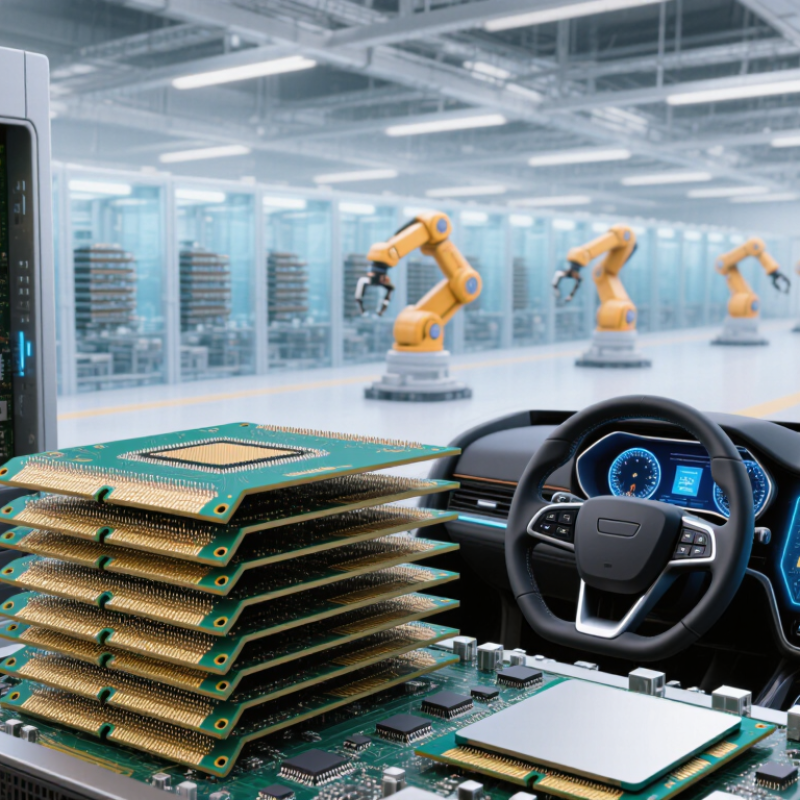
2026 Top Semiconductor Memory Industry Overview?

Semiconductor Memory Industry Definition and Core Technologies

Semiconductor memory is the electronic infrastructure that stores data temporarily or permanently. It includes volatile memory, such as DRAM, and non-volatile memory, such as NAND flash. DRAM holds working data near the processor, while NAND retains files after power disappears. The boundary is not perfectly clean. New memory architectures increasingly combine storage, speed, and processing functions.

The market is also highly cyclical. WSTS reported approximately 80% year-on-year growth for the memory segment in 2024, following a severe inventory correction. That rebound shows demand, but it does not guarantee stable pricing. Capacity utilization, server investment, and consumer electronics shipments can change quarterly results. Forecasts from professional research firms should therefore be read as ranges, not promises.

Core technologies are evolving at several physical levels. Three-dimensional NAND stacks cells vertically, increasing density within a small package. DRAM improvements depend on narrower process dimensions, faster interfaces, and advanced packaging. High-bandwidth memory uses stacked dies and wide connections, supporting data-intensive computing. JEDEC standards define important interface requirements, including transfer rates, timing, and power behavior. In practical testing, engineers still examine heat, signal integrity, endurance, and error rates. A dense design can fail in the field if thermal margins are ignored. That lesson is easy to underestimate.

Key Memory Product Segments and Leading Applications in 2026

By 2026, semiconductor memory will divide into several specialized product segments. DRAM will support servers, personal devices, and industrial controllers requiring fast temporary storage. High-bandwidth memory will serve artificial intelligence accelerators and scientific computing platforms. Its value comes from moving large data volumes quickly, not simply increasing capacity.

NAND flash will remain central to solid-state storage, smartphones, connected vehicles, and edge equipment. Higher-density designs can reduce storage costs, but endurance and thermal control still require careful testing. NOR flash will continue supporting boot code, firmware, and safety functions in vehicles and factory systems. It is slower than many newer memories, yet its reliability remains useful.

Emerging non-volatile memory may enter selected industrial and embedded applications. These products could reduce latency and power use, although manufacturing consistency remains a concern. In practical system evaluations, memory performance depends on controllers, software, cooling, and workload patterns. A faster memory device may deliver limited gains in a poorly balanced system. That point is often overlooked. My view remains cautious: 2026 demand will grow, but product selection must follow application data rather than impressive specifications.

2026 Top Semiconductor Memory Industry Overview

The chart presents rounded 2026 estimates of memory demand by leading application and memory product segment. Data-center infrastructure is expected to be the largest demand center, supported by AI servers, high-bandwidth memory, and enterprise SSDs. DRAM remains essential for system memory and accelerators, while NAND is concentrated in SSDs, smartphones, and other high-capacity storage products. Percentages represent estimated shares of application-level memory demand and are not company or brand data.

Major Global Manufacturers and Competitive Market Structure

The 2026 semiconductor memory market remains highly concentrated, despite strong demand from artificial intelligence servers, smartphones, and advanced vehicles. The World Semiconductor Trade Statistics forecast global semiconductor sales at about US$697 billion in 2025, with memory among the fastest-growing categories. Its data suggests that capacity investment is returning, but supply discipline remains uneven.

Competitive power is clearest in DRAM. TrendForce estimates that the three largest producers controlled more than 95% of conventional DRAM revenue in recent quarters. NAND is broader, yet the five largest producers still represented over 90% of the market. This structure gives major manufacturers stronger pricing influence, especially when customers require high-bandwidth memory or enterprise-grade solid-state storage. Scale matters. Manufacturing yields, packaging access, and long-term supply contracts can matter more than unit price.

The market is not perfectly stable. A sudden inventory correction could weaken pricing, while artificial intelligence demand may absorb capacity faster than expected. Gartner’s semiconductor outlook also points to growing infrastructure investment, but forecasts can age quickly. That is the uncomfortable part. Smaller suppliers may find opportunities in specialty memory, automotive qualification, and industrial endurance, although entering advanced production remains expensive. Reported market shares also differ by methodology, so investors should compare shipment, revenue, and wafer-capacity data before judging competitive strength.

2026 Industry Trends, Innovations, and Supply Chain Developments

2026 Top Semiconductor Memory Industry Overview

2026 Industry Trends, Innovations, and Supply Chain Developments

In 2026, memory demand will be shaped by AI servers, vehicle computing, and local data processing. High-bandwidth memory will remain important because stacked dies move data faster with less board space. Thermal limits are tightening. Engineers must balance bandwidth, power, yield, and package reliability.

New process designs will emphasize vertical scaling, advanced controllers, and error correction. Three-dimensional stacking can improve density, but it also increases testing complexity. Small defects become expensive. Better inspection tools, known-good-die screening, and real-time process data should reduce avoidable losses. Still, forecasts may overestimate AI demand. That is an uncomfortable risk.

Supply chains are becoming more regional and measurable. Memory producers will diversify wafer capacity, packaging sites, specialty gases, and substrate sources. Buyers will seek longer visibility into lead times, not only lower prices. Water recycling and lower-energy fabrication will influence site selection, especially near constrained utilities. Traceability will extend from raw materials to final module testing. Inventory discipline will matter. A sudden order surge can hide weak end-market demand. Channel data, qualification schedules, and customer design wins provide better signals than shipment volume alone. The industry may invest heavily before demand proves durable. Some expansion plans will still be revised after qualification data arrives.

2026 Top Semiconductor Memory Industry Overview: Industry Trends, Innovations, and Supply Chain Developments

Category Key Metric or Baseline 2026 Industry Direction Supply Chain and Technology Impact Reference
Global semiconductor market Global semiconductor sales were approximately US$626.9 billion in 2024; the 2025 industry forecast was approximately US$697 billion. Memory is expected to remain one of the fastest-changing segments, although growth rates may normalize after the strong recovery cycle. Capacity planning is increasingly linked to artificial-intelligence infrastructure, enterprise storage, mobile devices, and automotive electronics. World Semiconductor Trade Statistics, 2025 market forecast
DRAM demand DRAM is a volatile market because annual bit demand, inventory levels, and contract pricing can change rapidly. Demand is expected to favor high-bandwidth memory, server memory, and higher-capacity modules over basic personal-computer configurations. The product mix is shifting toward advanced packaging, larger memory stacks, and increased testing requirements. JEDEC memory standards; industry market reports
DDR5 transition The standard DDR5 data-rate range defined by JEDEC extends from 3,200 to 6,400 MT/s. DDR5 adoption is expected to become increasingly mainstream across servers, workstations, and new desktop platforms. Higher data rates increase demand for signal-integrity testing, advanced substrates, power-management components, and validated module designs. JEDEC JESD79-5, DDR5 SDRAM Standard
High-bandwidth memory HBM3 supports data rates up to 6.4 Gb/s per pin; with a 1,024-bit interface, theoretical bandwidth is approximately 819 GB/s per stack. HBM is expected to remain a strategic growth area for accelerated computing and advanced data-center processors. The main constraints are stack assembly, known-good-die availability, thermal management, advanced packaging capacity, and electrical testing. JEDEC JESD250E, HBM3 Standard
HBM3E development HBM3E supports data rates up to approximately 9.6 Gb/s per pin, equivalent to about 1.23 TB/s per 1,024-bit stack under ideal conditions. HBM3E-class products are expected to support continued expansion of AI training, inference, and high-performance-computing systems. Yield management, thermal design, interposer availability, and advanced packaging equipment remain critical bottlenecks. JEDEC HBM3E technical specifications
NAND flash scaling Commercial 3D NAND products had surpassed 200 vertical layers by the mid-2020s. Further scaling is expected to focus on higher layer counts, improved bit density, and cost reduction rather than layer count alone. Etch depth, wafer processing time, defect control, staircase formation, and high-aspect-ratio manufacturing become increasingly important. International Solid-State Circuits Conference publications; industry technology disclosures
Solid-state storage interfaces PCI Express 5.0 provides 32 GT/s per lane; PCI Express 6.0 doubles this to 64 GT/s per lane. Faster interfaces are expected to expand in enterprise storage, data-center accelerators, and high-performance workstations. Controller design, error correction, thermal throttling, firmware validation, and motherboard compatibility will remain major design factors. PCI-SIG PCI Express 5.0 and 6.0 specifications
Wafer manufacturing Modern high-volume DRAM and NAND manufacturing primarily uses 300 mm silicon wafers. Expansion is expected to emphasize productivity, yield improvement, and flexible conversion between memory products. Long lead times for lithography, deposition, etch, inspection, and wafer-fabrication equipment can limit rapid capacity responses. SEMI industry standards and equipment-market reports
Advanced packaging HBM commonly uses vertically stacked dies connected through thousands of through-silicon vias and integrated with an advanced package. Packaging capacity is expected to become as important as front-end wafer capacity for high-performance memory supply. Interposers, substrates, thermal materials, bonding tools, and package-level inspection are strategic supply-chain inputs. IEEE and semiconductor packaging technical literature
Data-center memory intensity AI and high-performance-computing systems require substantially more memory bandwidth than conventional general-purpose servers. Memory bandwidth, capacity per accelerator, and power efficiency are expected to remain key purchasing criteria in 2026. Demand will increase for high-bandwidth stacks, high-capacity server modules, fast storage, and advanced cooling systems. High-performance-computing architecture studies; JEDEC standards
Automotive and industrial memory Automotive memory must meet extended temperature, reliability, qualification, and product-lifecycle requirements. Demand is expected to increase with advanced driver-assistance systems, centralized computing, infotainment, and software-defined vehicles. Long qualification cycles and stricter traceability reduce the speed at which new memory technologies can enter vehicle platforms. AEC-Q100 and automotive semiconductor qualification frameworks
Inventory and pricing cycle Memory pricing historically shows greater cyclicality than many logic-device categories because supply additions can temporarily exceed demand. 2026 purchasing strategies are likely to emphasize inventory visibility, flexible contracts, and diversified qualification. Balanced production discipline is important to avoid oversupply in conventional memory while advanced-memory demand remains tight. Historical semiconductor market-cycle analysis
Energy and sustainability Memory fabrication requires substantial electricity, ultra-pure water, process gases, and chemical inputs. Energy efficiency, water recycling, renewable electricity, and lower-impact process materials are expected to receive greater investment. Environmental reporting and resource-security requirements will influence site selection, operating costs, and supplier qualification. International Technology Roadmap for Semiconductors; semiconductor sustainability reports
Supply-chain resilience The memory supply chain depends on geographically distributed wafer fabrication, packaging, testing, materials, equipment, chemicals, and logistics. Regional diversification, dual sourcing, strategic inventories, and government-supported capacity are expected to remain central themes in 2026. Resilience planning will focus on critical materials, power and water availability, export controls, logistics continuity, and qualified alternatives. OECD semiconductor supply-chain studies; government industrial-policy reports
2026 strategic priority The strongest technology priorities are bandwidth, capacity density, power efficiency, yield, packaging scalability, and supply continuity. The industry is expected to move from a capacity-only strategy toward an integrated wafer, package, thermal, software, and logistics strategy. Organizations with diversified sourcing, validated alternatives, and strong advanced-packaging access should be better positioned to manage demand volatility. Synthesis of the cited standards, forecasts, and supply-chain studies

Note: 2026 statements are industry outlooks based on publicly available standards, forecasts, and technology data; final 2026 market results may differ because of demand, inventory, pricing, policy, and capacity changes.

Market Opportunities, Risks, and Future Growth Outlook

2026 Top Semiconductor Memory Industry Overview: Market Opportunities, Risks, and Future Growth Outlook

The memory market enters 2026 with stronger demand from artificial intelligence servers, vehicles, industrial sensors, and edge devices. High-performance memory will remain central to systems that process large models near real time. Traditional memory also matters. Phones, appliances, and factory equipment still require affordable, dependable storage.

Opportunities are appearing beyond capacity expansion. Manufacturers can improve energy efficiency, packaging density, error correction, and thermal control. A server rack may consume substantial power, so each memory upgrade must deliver measurable performance per watt. Smaller industrial modules could also gain traction in robotics, medical equipment, and transport systems. Engineers should test these products under heat, vibration, and continuous workloads, not only in clean laboratories.

Risks remain uncomfortable. Memory prices can change quickly when producers misjudge demand. Excess inventory may weaken profits within a few quarters. Advanced production also needs large capital investments, stable electricity, clean water, and skilled technicians. Supply disruptions could affect materials, equipment, or regional logistics. Security requirements are becoming stricter as connected devices store more sensitive data.

The growth outlook is positive, but forecasts deserve skepticism. Demand from artificial intelligence may cool if customers delay infrastructure spending. Some projected applications may arrive later than expected. A practical strategy combines flexible production, long-term customer testing, and disciplined inventory control. Progress will likely belong to suppliers that manage cycles carefully, rather than those chasing every short-lived surge.

FAQS

What is semiconductor memory?

Semiconductor memory stores data temporarily or permanently. DRAM supports active tasks, while flash memory keeps files after power loss.

How do DRAM and NAND flash differ?

DRAM works close to the processor and provides fast temporary storage. NAND flash retains photos, software, and files without continuous power.

Why is the memory market cyclical?

Inventory levels, server spending, and device shipments can change quickly. Strong yearly growth may still lead to unstable prices.

What is three-dimensional NAND?

Three-dimensional NAND stacks memory cells vertically inside a compact package. This design increases storage density without simply expanding the package footprint.

What does high-bandwidth memory support?

High-bandwidth memory moves large data volumes rapidly. It suits artificial intelligence accelerators and scientific computing platforms.

Where is NOR flash commonly used?

NOR flash stores boot code, firmware, and safety functions. It appears in vehicles, factory systems, and embedded controllers.

Can higher memory density reduce storage costs?

Higher density can reduce cost per stored unit. However, endurance, heat, and controller quality still need careful testing.

What should engineers test in a memory design?

Engineers should examine heat, signal integrity, endurance, timing, and error rates. A dense design can fail when thermal margins are too narrow.

Does faster memory always improve system performance?

No. Software, cooling, controllers, and workload patterns can limit real gains. Specifications can look impressive. The result may still disappoint.

How should buyers choose memory products in 2026?

Buyers should match memory to actual application data, not headline specifications. Demand may grow, but forecasts remain estimates, not promises.

Conclusion

This Semiconductor memory industry overview examines the technologies, products, and market forces shaping the sector in 2026. Semiconductor memory includes volatile solutions such as dynamic and static memory, as well as nonvolatile storage technologies used in computing, mobile devices, automotive systems, industrial equipment, artificial intelligence infrastructure, and connected electronics. The industry is supported by advances in density, speed, energy efficiency, reliability, and three-dimensional manufacturing.

In 2026, competition is expected to remain strong among global manufacturers, with market structure influenced by production capacity, process innovation, intellectual property, and supply chain resilience. Key trends include growing demand for high-performance memory, advanced packaging, edge computing, automotive applications, and intelligent data centers. Opportunities will come from expanding digital infrastructure and specialized memory products, while risks may include demand cycles, pricing pressure, equipment constraints, geopolitical uncertainty, and high capital requirements. Long-term growth will depend on innovation, balanced capacity planning, and sustainable manufacturing.

Isabella

Isabella

Isabella is a dedicated marketing professional with a sharp focus on driving brand growth and engagement through strategic content creation. With an extensive background in digital marketing, she combines her passion for storytelling with her keen understanding of industry trends to deliver......