China Top RAM Chip Manufacturers How Are RAM Chips Made?

Time:2026-10-13 Author:Sophia
0%

Understanding How RAM chips are made begins with a microscopic storage cell, not a finished computer module. Each DRAM cell usually combines one transistor with one capacitor. The capacitor holds an electrical charge. That charge represents data. Tiny differences matter. A dust particle can ruin an entire wafer.

Robert H. Dennard, the DRAM pioneer, explained the principle clearly: “The memory cell is basically a capacitor and a transistor.” His work established the foundation for modern dynamic random-access memory. Today, engineers repeat this idea across billions of cells. They grow ultra-clean silicon wafers, deposit thin films, print circuit patterns with lithography, and etch narrow structures. Ion implantation adjusts the electrical behavior of selected regions. Copper or tungsten contacts then connect the layers. Testing follows at several stages. Some chips fail. Manufacturers must identify why.

China’s leading RAM chip manufacturers operate within this demanding chain. Companies such as ChangXin Memory Technologies have developed domestic DRAM production capabilities, although specific process recipes remain closely guarded. Public information often shows the direction, but not every engineering detail. That limitation deserves attention. A factory may report wafer output without revealing yield, defect density, or long-term reliability.

The process is precise, yet imperfect. Temperature shifts, vibration, and microscopic contamination can affect performance. Packaging adds another challenge. Engineers place the die inside a protective package, connect it electrically, and test speed, voltage, and retention. Only then does the memory become a usable module. This article examines each manufacturing stage, while questioning one common assumption: higher density does not automatically mean better RAM. Stability, endurance, quality control, and consistent supply matter too.
China Top RAM Chip Manufacturers How Are RAM Chips Made?

RAM Chip Types and Their Role in Modern Computing

RAM chips are working memory for modern computing systems. Their type directly affects speed, power use, cost, and physical design. SRAM stores each bit in a transistor-based circuit. It responds quickly and needs no refresh. However, it occupies more silicon area and costs more per bit. DRAM stores data as electrical charge inside tiny memory cells. That charge gradually leaks away. Therefore, DRAM requires continuous refreshing.

SDRAM coordinates data transfers with the system clock. DDR memory moves data on both clock edges, improving bandwidth without doubling the clock frequency. Lower-power variants reduce voltage for mobile devices and embedded systems. Graphics-oriented memory provides very wide data paths for image rendering and parallel calculations. Each type serves a different workload. There is no universally best option.

During manufacturing, memory cells form through repeated deposition, photolithography, etching, and electrical testing. Cleanroom control matters because microscopic contamination can damage many cells. Packaging then connects the chip to a circuit board or advanced module. A practical mistake is judging RAM only by its advertised speed. Latency, channel design, temperature, and controller quality also influence real performance. Specifications can mislead. Engineers still need measured results from the final system.

China’s Leading RAM Chip Manufacturers and Market Focus

China’s leading RAM chip manufacturers are shaping a market focused on supply security, reliable performance, and local production. Major memory producers, specialty foundries, and packaging companies support this ecosystem. Their work covers DDR4, DDR5, and low-power RAM for servers, computers, vehicles, and smart devices.

RAM manufacturing begins with ultra-clean silicon wafers. Engineers form microscopic transistor structures through repeated deposition, exposure, etching, and polishing. After testing, working dies are packaged and checked for speed, heat, and stability. China’s market focus is shifting toward higher-density modules and advanced packaging. However, public production data can lag behind real factory changes. Market rankings therefore deserve careful review. The boundaries between a chip maker and a packaging partner are not always clear.

Tips: Check process generation, capacity, error-correction support, and temperature ratings before comparing suppliers. Ask for test reports and traceability records. A lower price may hide longer validation time. Also, confirm whether the supplier supports long-term supply, because product transitions can affect projects.

From Silicon Wafer to Memory Cell: How RAM Chips Are Made

From Silicon Wafer to Memory Cell: How RAM Chips Are Made

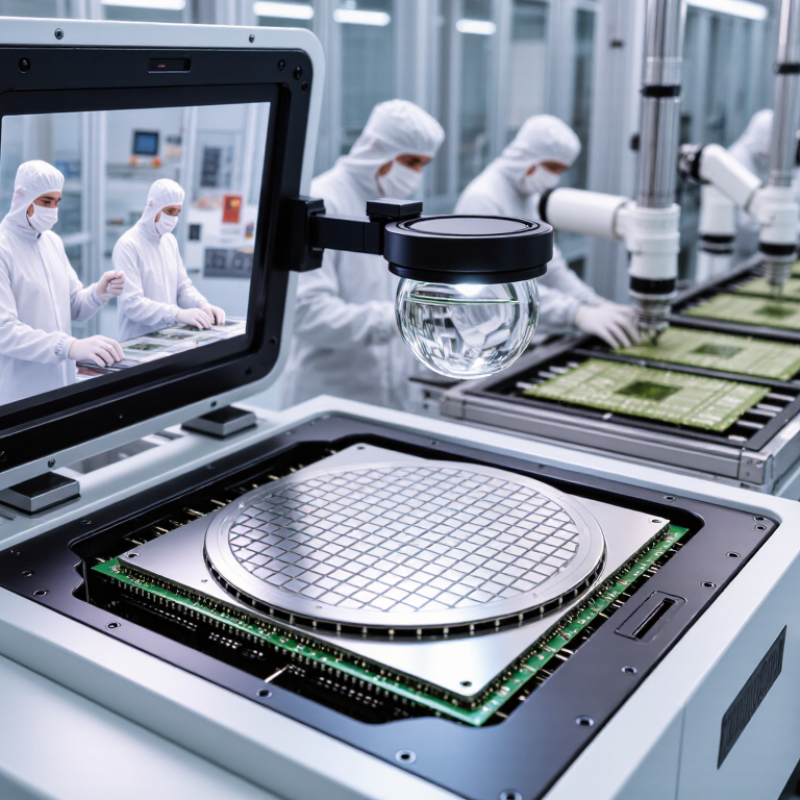
RAM chip production begins with a polished silicon wafer, usually thinner than a coin. Engineers clean its surface inside highly controlled rooms. Even a tiny particle can damage several memory dies. That risk makes cleanliness a daily discipline, not a marketing phrase.

Manufacturers deposit thin films onto the wafer and use lithography to create microscopic patterns. Etching removes selected material, while ion implantation adjusts electrical behavior. Repeated layering forms transistors, capacitors, word lines, and bit lines. In dynamic RAM, each memory cell stores data through a transistor and capacitor. The capacitor holds an electrical charge briefly. It must be refreshed continuously.

The process is precise, but never perfect. Some cells may leak charge faster than expected. Testing systems check speed, voltage stability, retention, and refresh performance. Technicians divide the wafer into individual dies before packaging them with protective materials and connection points. Further tests run under heat and changing voltage conditions. A clean wafer does not guarantee a perfect chip. That assumption is too simple. Engineers still study failed dies, adjust process conditions, and improve inspection methods. From my experience reviewing semiconductor production, the smallest defect often teaches the most. Yield remains measurable, not absolute.

Testing, Packaging, and Quality Control in RAM Production

RAM production does not end when the memory cell structure is complete. At wafer probe, automated needles check voltage response, leakage, and basic data retention. Test engineers compare results across temperature ranges, because a chip passing at room temperature may fail in a hot system. High-speed testing then checks timing margins, signal integrity, and stable read and write operations. Small variations matter.

After testing, qualified dies enter the packaging stage. Each die is attached to a substrate, connected through fine wires or microscopic bumps, and sealed with protective molding material. Automated optical inspection checks alignment, surface marks, and package dimensions. X-ray inspection can reveal hidden voids or weak connections. The package is then marked and electrically tested again. Packaging errors can appear even when the original die was perfect.

Quality control continues through burn-in, thermal cycling, and repeated functional tests. These steps expose early failures caused by heat, electrical stress, or mechanical movement. Statistical process control helps technicians identify unusual trends before many units are affected. Still, no factory catches every marginal chip. A rare intermittent fault may escape normal screening. That is an uncomfortable limitation. Reliable manufacturers review field data, adjust test limits carefully, and investigate failures instead of hiding them. Overly strict limits can waste good material, while loose limits can damage customer trust. Good control requires evidence, patience, and occasional correction.

Applications, Innovation, and Future Trends in China’s RAM Industry

China’s RAM industry is moving beyond commodity memory toward application-specific performance. According to SEMI’s World Fab Forecast 2024, China was projected to hold about 26% of global 300mm fab capacity in 2025. This capacity supports DRAM production for servers, smartphones, vehicles, industrial controllers, and edge-AI equipment.

RAM chips begin with polished silicon wafers. Manufacturers deposit thin films, use lithography to define circuits, and etch microscopic patterns. DRAM cells combine transistors with capacitors, then undergo metal interconnection, packaging, and electrical testing. Advanced inspection is essential because one tiny defect can reduce usable output. The process is precise, but not perfectly predictable.

Demand is changing quickly. The WSTS Spring 2025 forecast placed the global memory market near 30% growth in 2025, driven by data centers and AI systems. China’s opportunity lies in higher-density modules, low-power memory, automotive reliability, and domestically supplied equipment. Industry reports from TrendForce also show continuing investment in high-bandwidth memory and server DRAM capacity. Yet progress should not be judged only by wafer output. Energy use, yield, thermal control, and software compatibility matter equally. Some forecasts may prove optimistic, especially when supply expands faster than real demand. That assumption needs testing.

China Top RAM Chip Manufacturers How Are RAM Chips Made? - Applications, Innovation, and Future Trends in China’s RAM Industry

Data Dimension Key Information China Industry Relevance Typical Applications Development Direction
Basic RAM Structure Dynamic RAM stores each bit in a memory cell composed mainly of one transistor and one capacitor. The capacitor holds charge, while the transistor controls access. Domestic research and manufacturing activities cover memory-cell design, process integration, wafer fabrication, testing, and packaging. Computers, servers, mobile devices, networking equipment, industrial controllers, and embedded systems. Higher cell density, lower leakage, improved retention, and better manufacturing yield.
1. Circuit and Cell Design Engineers define the memory-cell array, sense amplifiers, row and column decoders, input/output circuits, power systems, and error-management functions. Design capability supports products for consumer electronics, data centers, automotive electronics, and industrial equipment. Standard memory modules, mobile memory, graphics memory, and specialized embedded memory. Design co-optimization between memory arrays, controllers, packaging, and system software.
2. Wafer Preparation Silicon wafers are cleaned, polished, inspected, and prepared for repeated semiconductor processing steps. Wafer quality affects defect density, electrical performance, manufacturing yield, and long-term reliability. All DRAM, LPDDR, GDDR, and other silicon-based memory products. Tighter contamination control, advanced inspection, and improved utilization of wafer area.
3. Photolithography Light is used to transfer circuit patterns from masks to photoresist-coated wafers. The process is repeated for multiple layers. Lithography capability influences minimum feature size, alignment accuracy, production cost, and achievable density. High-density memory devices requiring precise transistor, capacitor, and interconnect patterns. Improved overlay accuracy, process control, computational lithography, and defect inspection.
4. Deposition, Etching, and Ion Implantation Thin films are deposited, unwanted materials are etched away, and selected regions are electrically modified through ion implantation and thermal processing. These steps determine transistor characteristics, capacitor performance, interconnect quality, and device reliability. Every manufactured DRAM wafer and other advanced semiconductor memory products. More uniform high-aspect-ratio structures, lower process variability, and reduced material consumption.
5. Interconnect and Passivation Metal and insulating layers connect circuit elements. A protective passivation layer helps shield the finished wafer from moisture and contamination. Reliable interconnects are essential for high-speed signaling, low power consumption, and long product life. Server memory, mobile memory, automotive memory, and industrial-grade memory. Lower resistance, improved signal integrity, finer interconnect pitch, and stronger protection against environmental stress.
6. Wafer Sort and Electrical Testing Individual die are electrically tested on the wafer to identify defects, measure operating margins, and classify performance. Testing data supports yield improvement, product binning, reliability screening, and process feedback. Memory components sold at different speed, capacity, voltage, and reliability grades. Artificial-intelligence-assisted defect analysis, faster test systems, and data-driven yield management.
7. Assembly and Packaging Tested dies are separated, assembled into packages, connected using wire bonding or advanced interconnection methods, and sealed for protection. Packaging determines electrical bandwidth, thermal behavior, form factor, service life, and integration flexibility. Memory modules, mobile packages, graphics cards, servers, automotive electronics, and compact embedded devices. Chip stacking, advanced substrates, hybrid bonding, improved thermal management, and heterogeneous integration.
Main RAM Product Categories Common categories include DDR SDRAM for general-purpose systems, LPDDR for low-power devices, GDDR for graphics workloads, and HBM for high-bandwidth computing. Different product categories serve China’s computing, consumer-electronics, telecommunications, automotive, and industrial markets. PCs and servers; smartphones and tablets; graphics processing; artificial intelligence and high-performance computing. Broader product coverage, higher bandwidth, lower energy per transferred bit, and application-specific memory solutions.
Key Performance Indicators Important specifications include capacity, data-transfer rate, latency, operating voltage, bandwidth, refresh behavior, error rate, and operating temperature. Product competitiveness depends on balancing speed, power, cost, reliability, and compatibility with local system designs. Consumer devices, cloud infrastructure, edge computing, vehicles, and factory automation. Energy-efficient performance, real-time monitoring, improved error correction, and application-specific optimization.
Artificial Intelligence and Data Centers AI workloads require high memory bandwidth, large capacity, efficient data movement, and strong thermal performance. China’s growth in cloud services, supercomputing, and AI infrastructure increases demand for advanced memory and packaging technologies. AI servers, high-performance computing, cloud platforms, and large-scale data analytics. High-bandwidth memory, 2.5D and 3D integration, near-memory processing, and improved memory-to-compute efficiency.
Automotive and Industrial Reliability Automotive and industrial RAM must withstand temperature variation, vibration, electrical noise, and extended operating periods. Demand is supported by electric vehicles, advanced driver-assistance systems, industrial automation, and intelligent transportation infrastructure. Vehicle control units, infotainment, autonomous-driving systems, robots, cameras, and factory controllers. Automotive qualification, wider temperature ranges, long-term availability, functional safety, and stronger error-management features.
Energy Efficiency Memory power is influenced by voltage, refresh frequency, data-transfer activity, standby leakage, and thermal conditions. Lower power consumption helps reduce operating costs in data centers and extend battery life in portable electronics. Smartphones, notebooks, edge devices, servers, and battery-powered equipment. Low-voltage interfaces, adaptive refresh, power-aware controllers, improved standby modes, and advanced cooling.
Supply-Chain Localization A complete memory supply chain includes design, materials, equipment, wafer processing, packaging, testing, software support, and system integration. Localization can improve supply resilience, shorten engineering feedback cycles, and support domestic electronics production. Consumer electronics, telecommunications, computing, automotive, and industrial systems. Greater domestic capability in materials, manufacturing equipment, process control, packaging, and testing services.
Future Industry Trends The industry is moving toward higher density, higher bandwidth, lower power consumption, advanced packaging, intelligent manufacturing, and more specialized memory architectures. China’s future development will be shaped by demand from AI, cloud computing, connected vehicles, consumer devices, industrial automation, and edge computing. AI infrastructure, smart cities, connected vehicles, robotics, mobile computing, and high-performance electronics. HBM and stacked memory, chiplet-based systems, advanced packaging, sustainable manufacturing, process automation, and memory-compute integration.
Data note: This table summarizes established RAM manufacturing principles, recognized memory product categories, and widely observed technology directions without presenting company or brand-specific information.

FAQS

What is the main purpose of a RAM chip?

RAM provides temporary working space for active programs and system operations. It helps the processor access data quickly.

How do SRAM and DRAM differ?

SRAM uses transistor-based circuits and needs no refresh. DRAM stores charge in tiny cells and requires continuous refreshing. SRAM is faster, but larger and more expensive per bit.

Why does DRAM need refreshing?

Its capacitor gradually loses electrical charge. Refresh operations restore the stored information before it disappears. The process is continuous.

What does DDR memory improve?

DDR memory transfers data on both edges of the clock signal. This increases bandwidth without doubling the clock frequency.

Which RAM type suits mobile and embedded systems?

Lower-power memory reduces voltage and energy use. It can help devices with small batteries or limited cooling. Lower power may involve trade-offs.

Why is graphics-oriented memory useful?

It provides very wide data paths for image rendering and parallel calculations. This design supports workloads involving many pixels or simultaneous operations.

Does advertised RAM speed determine real performance?

No. Latency, channel design, temperature, and controller quality also matter. A higher number can still disappoint.

How are RAM chips manufactured?

Engineers clean a polished silicon wafer, deposit thin films, and create patterns through lithography. Etching and ion implantation shape electrical structures. Repeated layers form transistors, capacitors, word lines, and bit lines.

How are memory chips tested for quality?

Testing checks speed, voltage stability, data retention, and refresh performance. Additional tests use heat and changing voltage. A clean wafer does not guarantee a perfect chip.

Why do manufacturers study failed memory dies?

Small defects can reveal process problems or unexpected leakage. Engineers adjust manufacturing conditions and improve inspections. Yield is measurable, never absolute.

Conclusion

RAM chips are essential to modern computing because they provide fast, temporary storage for operating systems, applications, and data. Different types, including dynamic and static RAM, serve distinct purposes in personal computers, servers, mobile devices, and embedded systems. China’s RAM industry includes manufacturers and technology developers focused on expanding production capacity, improving performance, reducing energy consumption, and strengthening supply-chain capabilities. Their market priorities cover consumer electronics, industrial equipment, data centers, automotive systems, and other rapidly growing applications.

How RAM chips are made begins with highly purified silicon wafers. Circuit patterns are formed through repeated processes such as oxidation, deposition, coating, exposure, etching, and ion implantation. These steps create memory cells, control circuits, and electrical connections on the wafer. After fabrication, each chip is tested for speed, power efficiency, stability, and reliability before being separated and assembled into packages. Strict quality control continues through final inspection and performance testing. Looking ahead, China’s RAM industry is expected to pursue higher densities, faster data transfer, advanced packaging, greener manufacturing, and innovative memory architectures.

Sophia

Sophia

Sophia is a dedicated marketing professional with an exceptional depth of knowledge about her company's products and services. With a keen understanding of market trends and customer needs, she crafts insightful blog posts that not only inform but also engage readers, enriching the company’s online......