 VoltDRAM
VoltDRAM
VoltDRAM
As technology evolves, upgrading your PC becomes essential for better performance. One key component in this upgrade is RAM. In recent years, DDR5 has emerged as the latest standard. So, what is DDR5 RAM? It's designed to provide higher speeds, energy efficiency, and greater bandwidth than its predecessor, DDR4.
According to industry reports, DDR5 offers up to 6400 MT/s, doubling the maximum bandwidth available with DDR4. This increase can significantly benefit gaming, content creation, and multitasking applications. The average latency remains a concern, as some users notice it isn't as low as expected. While DDR5 excels in speed and efficiency, it may require a compatible motherboard, which could add complexity to the upgrade process.
When considering an upgrade, it’s vital to analyze your specific needs. Users engaged in memory-intensive tasks may find DDR5 invaluable. However, less demanding applications may not fully utilize its capabilities. Therefore, balancing performance demands with budget constraints is essential. Remember, selecting the right RAM can profoundly impact your overall PC experience.
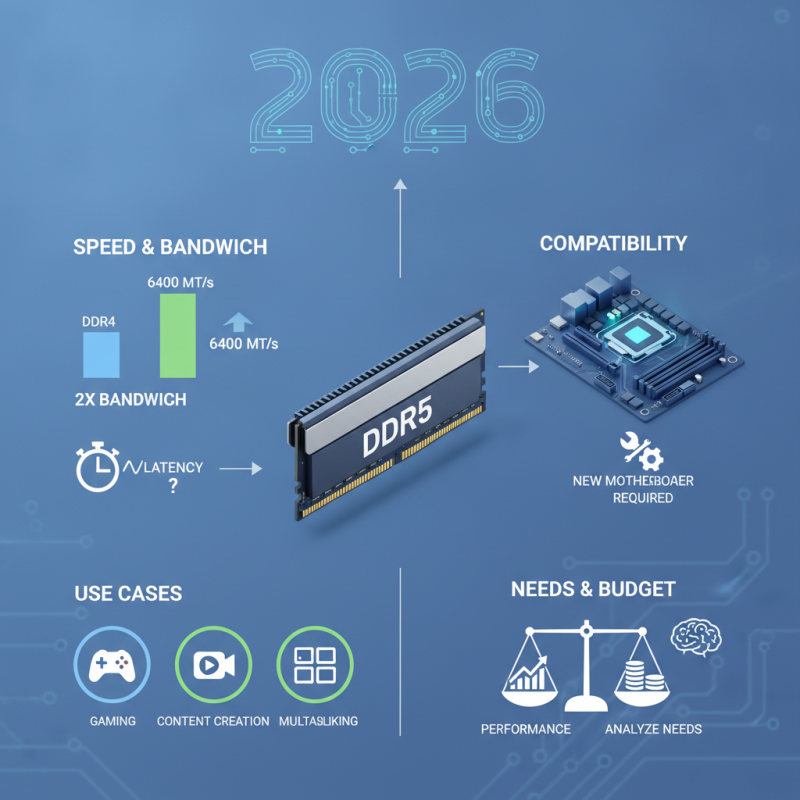
When upgrading your PC, understanding DDR5 RAM is crucial. DDR5 RAM offers significant improvements over its predecessor. Its increased bandwidth enhances data transfer rates, making multitasking smoother. This is especially beneficial for gamers and content creators. DRAM latency is reduced, which helps with fast response times for demanding applications.
Another key feature is the improved power efficiency. DDR5 operates at a lower voltage, which can lead to less heat generation and longer component lifespan. This might not be immediately noticeable, but it contributes to overall system stability. Additionally, manufacturers have designed DDR5 for greater capacity, allowing for modules that reach up to 64GB. This is beneficial for heavy workloads and future-proofing your system.
Despite these advantages, choosing DDR5 RAM isn’t without challenges. Compatibility issues may arise with older motherboards. It's important to confirm support before purchasing. Prices can also be higher compared to previous generations, which might require budget adjustments. Remember, while DDR5 RAM has many benefits, assessing your specific needs is key to making the right choice. Ultimately, the decision should reflect both current and future usage scenarios.
| Feature | Description | Benefits |
|---|---|---|
| Speed | DDR5 RAM typically starts at 4800 MT/s and goes up to 8400 MT/s. | Faster speeds lead to better performance in gaming and applications. |
| Capacity | Modules available in capacities ranging from 8GB to 64GB per stick. | More memory allows for better multitasking and handling larger files. |
| Power Efficiency | DDR5 operates at a voltage of 1.1V, lower than DDR4. | Lower power consumption translates to less heat and increased longevity. |
| Latency | Typically has slightly higher latency compared to DDR4. | While latency is higher, the speed increase compensates for it in most situations. |
| Bandwidth | Offers double the bandwidth of DDR4 (up to 64 GB/s). | Higher bandwidth allows for improved performance in data-intensive tasks. |
M?
DDR5 RAM enhances multitasking, lowers latency, and operates at a reduced voltage, leading to better performance and stability.
For most users, 16GB is sufficient. However, heavy tasks may require 32GB or 64GB for optimal performance.
Yes, not all motherboards support DDR5. It's important to check your motherboard specifications before purchasing.
DDR5 operates at lower voltage, generating less heat and extending the lifespan of components, promoting overall system stability.
Typical data rates range from 4800 MT/s to 8400 MT/s. Higher rates can enhance performance, but may not suit all users.
Not necessarily. Everyday tasks may not benefit from extreme speeds. Assess your actual needs before making a decision.
While more RAM can improve performance, it’s essential to find a balance with your motherboard limitations and budget.
Consider your usage patterns and how they may evolve. Investing in higher capacities can extend your PC's lifespan.
Upgrading can provide significant benefits, but evaluate your needs and budget carefully before making the move.
DDR5 RAM represents a significant advancement in memory technology, offering enhanced performance and efficiency for PC upgrades. To understand what DDR5 RAM is, it’s essential to recognize its key features, including increased bandwidth and improved power management, which cater to the demands of modern computing. When considering an upgrade from DDR4 to DDR5, users can expect substantial improvements in multitasking capabilities and overall system responsiveness.
Selecting the right DDR5 RAM involves understanding capacity options and speed. Depending on your usage—be it gaming, content creation, or general multitasking—you'll need to choose the appropriate size of RAM to meet your needs. Additionally, the data rate is crucial for maximizing performance; higher speeds can significantly impact your PC's efficiency. Lastly, ensuring compatibility with your motherboard is vital to a successful upgrade, as not all systems support DDR5. By considering these factors, users can make informed decisions for optimizing their PC with DDR5 RAM.
