How RAM Impacts CPU Performance Tips for Buyers

Time:2026-08-14 Author:Ethan
0%

The relationship between RAM and CPU performance is often overlooked by many users. However, understanding "How RAM affects CPU performance" is crucial for anyone looking to upgrade their system. According to a recent report by Tech Insights, RAM speed can dictate the efficiency of CPU processes, leading to significant changes in overall system responsiveness.

Renowned hardware expert Dr. Emily Chen stated, “An underwhelming RAM setup can bottleneck even the most powerful CPUs.” This highlights the importance of pairing the right amount of RAM with a CPU. Insufficient memory leads to slow processing speeds and inefficient multitasking.

Notably, benchmarks show that systems with higher RAM capacities consistently outperform their lower-RAM counterparts by up to 30% in intensive tasks. Yet, many consumers purchase CPUs without considering the RAM. It's crucial to reflect on one's usage needs and strike a balance between these two elements to achieve optimal performance.
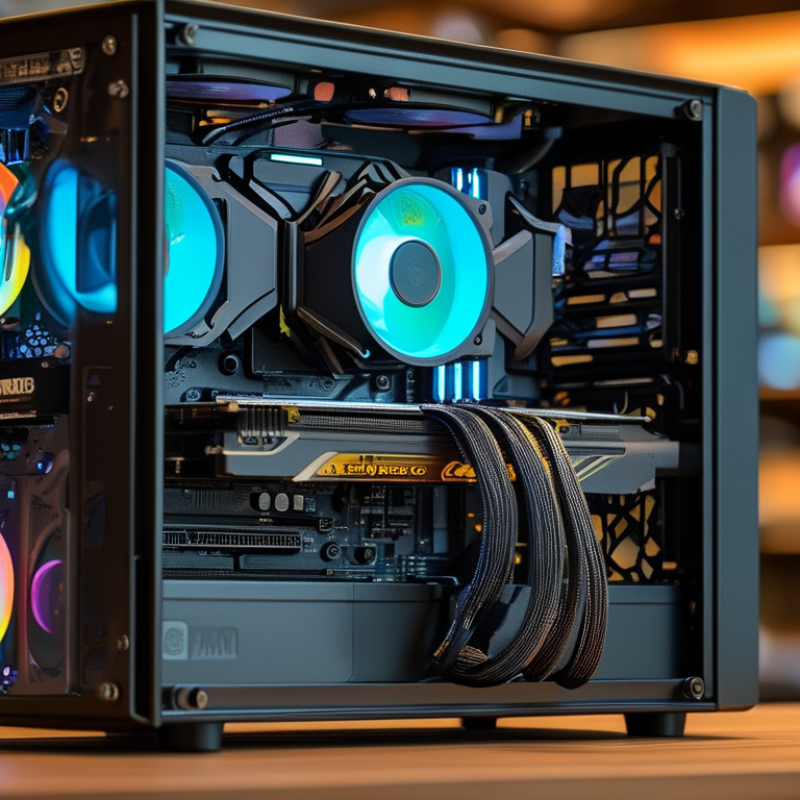
How RAM Impacts CPU Performance Tips for Buyers

Understanding the Role of RAM in CPU Performance

When considering CPU performance, RAM plays a crucial role. Random Access Memory temporarily stores data that the CPU needs in real time. More RAM allows for smoother multitasking, enabling programs to run simultaneously without lag. Users engaged in graphic design or gaming can particularly benefit from increased RAM. Larger RAM capacities ensure that the CPU has quick access to the necessary data, speeding up processes significantly.

However, it’s essential to balance RAM with your CPU’s capabilities. Adding too much RAM to an underpowered CPU won't yield noticeable benefits. This mismatch can lead to wasted resources. Understanding your usage needs is vital. For basic tasks like browsing or document editing, 8GB may suffice. On the other hand, heavy users might find 16GB or more necessary. Thus, buyers must assess their specific requirements before making a decision.

Curiously, some users find themselves leaning toward higher RAM out of habit rather than need. This trend can skew purchasing decisions. It’s wise to consider how you use your computer daily. Evaluating application requirements can lead to better choices. Always remember, just adding more RAM doesn’t necessarily equate to improved performance. It's about finding the right configuration that supports your CPU effectively.

Types of RAM and Their Impact on Processing Speed

When considering how RAM types affect processing speed, understanding DDR technology is essential. DDR (Double Data Rate) RAM has evolved through generations, impacting performance significantly. For example, DDR4 typically operates at speeds between 2133 MHz and 3200 MHz, while DDR5 can reach speeds exceeding 4800 MHz. Higher speeds translate to faster data access for the CPU, enhancing overall system responsiveness.

Moreover, RAM size plays a crucial role in performance. A system with 8GB RAM can struggle with modern applications, while 16GB has become the minimum recommended for multitasking. Industry reports indicate that systems with 32GB of RAM can experience noticeable improvements in data-heavy tasks like video editing and gaming. However, users may overlook the importance of latency, a measure of time delay in processing commands. Low-latency RAM can provide a competitive edge, particularly in gaming scenarios, where every millisecond counts.

Yet, there can be diminishing returns with excessive RAM. Users should assess their specific needs before overspending. A workstation for basic tasks might not benefit from 64GB of RAM. Understanding the balance between speed, size, and cost is key. As users gather more data on their needs, careful consideration can lead to a more effective investment in RAM.

Ideal RAM Size for Different Computing Needs

When choosing RAM, consider your specific computing needs. For casual users, 8GB is often sufficient. It handles web browsing, word processing, and basic photo editing smoothly. However, for gamers, 16GB is the sweet spot. According to a report from the International Data Corporation (IDC), 16GB RAM allows for better multitasking and frame rates in demanding games.

For content creators, such as video editors or graphic designers, 32GB or more can be beneficial. These users typically run multiple heavy applications simultaneously. A recent survey by TechSpot indicates that creators often experience slowdowns with less than 32GB RAM when working on projects. Such users should invest in higher RAM to ensure efficiency.

While more RAM can improve performance, it isn’t the only factor. It’s important to balance RAM size with CPU capabilities and SSD speeds. This holistic approach can enhance system responsiveness. Deciding on the right amount of RAM can be challenging and may require adjustments based on real-world usage and evolving software demands. Reflecting on personal requirements can guide you to the best choice.

Evaluating RAM Speed and Bandwidth for Optimal Performance

When considering RAM for your system, speed and bandwidth play crucial roles in CPU performance. RAM speed, measured in megahertz (MHz), indicates how fast data can be read or written. A higher speed allows faster access to data, which can significantly enhance performance in demanding tasks like gaming or video editing. However, simply choosing the fastest RAM on the market may not always yield the best results. Systems have their limitations, and compatibility with your motherboard is vital.

Bandwidth, referring to the volume of data that can be transferred simultaneously, also affects performance. Dual-channel configuration can double the bandwidth over a single-channel setup. Yet, many users overlook this aspect when upgrading. A mismatch in RAM configurations can lead to suboptimal speeds. It may be tempting to splurge on high-speed RAM without checking compatibility and configuration. This contrast between performance gains and installation issues warrants careful planning and consideration.

Tips for Choosing the Right RAM for Your CPU System

Choosing the right RAM is crucial for optimizing CPU performance. Various reports indicate that the right memory can enhance system speed significantly. For example, when gaming or running demanding software, faster RAM often results in noticeable improvements. A study by TechSpot shows that RAM speed can influence FPS rates in gaming by as much as 10-20%.

When selecting RAM, consider compatibility with your CPU and motherboard. Not all RAM types work seamlessly with every system. Look for specifications that match your CPU’s requirements. For instance, DDR4 is now the standard for many systems, but DDR5 offers improved speeds and efficiency. However, upgrading to DDR5 may not be cost-effective for all users.

Tips: Check the memory speed and latency ratios. Lower latency RAM provides quicker access speeds. Testing different configurations can uncover performance bottlenecks. Additionally, consider capacity. For most modern applications, 16GB is a good baseline, but 32GB may be better for intensive multitasking. Keep in mind that some users may find that beyond certain points, diminishing returns in performance can occur, making the choice of RAM a complex balance.

FAQS

: What is the role of R

M in CPU performance?

How much RAM do I need for basic tasks?

8GB is usually sufficient for browsing and document editing. It provides a good balance.

What about heavy users like gamers and content creators?

Gamers often need 16GB for better performance. Creators may require 32GB or more.

Can too much RAM waste resources?

Yes, adding excessive RAM to a weaker CPU may lead to wasted resources and no noticeable benefits.

How does RAM speed affect performance?

Higher RAM speeds lead to faster data access. DDR4 runs between 2133 MHz and 3200 MHz, while DDR5 exceeds 4800 MHz.

What is latency in RAM?

Latency measures time delay in processing commands. Low-latency RAM benefits performance, especially in gaming.

Is there a perfect RAM size for everyone?

No, it varies by individual needs. Assessing usage helps determine the best RAM size.

How should I assess my RAM needs?

Reflect on daily tasks and applications you use. Your needs guide your RAM purchase.

Does adding more RAM guarantee better performance?

Not always. Performance needs to be balanced with CPU capabilities and data requirements.

What should I consider when purchasing RAM?

Think about RAM size, speed, latency, and your specific computing demands for an effective investment.

Conclusion

In today's computing landscape, understanding how RAM affects CPU performance is crucial for both casual users and enthusiasts. RAM plays a vital role in determining how quickly and efficiently a CPU processes data. Different types of RAM, such as DDR4 and DDR5, can significantly impact processing speed, while the ideal RAM size varies according to specific computing needs, from gaming to professional applications.

Additionally, evaluating RAM speed and bandwidth is essential for optimizing overall performance in a system. Buyers should consider these factors carefully, as choosing the right RAM not only enhances CPU capabilities but also ensures that the entire system runs smoothly. By taking these aspects into account, users can make informed decisions that align with their computing objectives.

Ethan

Ethan

Ethan is a seasoned marketing professional with a deep expertise in our company's innovative product line. With a passion for sharing knowledge and insights, he takes the lead in regularly updating our corporate blog, where he explores industry trends, product features, and effective marketing......